The National Fraud Intelligence Bureau (NFIB) recently reported a new trend in fraud related to Coronavirus (COVID-19). Updated figures show that there have been 105 reports to Action Fraud since 1 February 2020, with total losses reaching nearly £970,000.
Some of the current fraud scams relating to COVID-19 that have been circulating range from conspiracy theoryand misinformation emails full of potential phishing links, scam lockdown fine text messages claiming to be from the Government, to fake and counterfeit products being sold – such as face masks and hand sanitiser gels.
An example of these awful scams is this one below. This email received by one of our grant applicants is a total scam and should be avoided. Customers should be vigilant and NOT reply to the email address rating @ipsn,gov,uk.
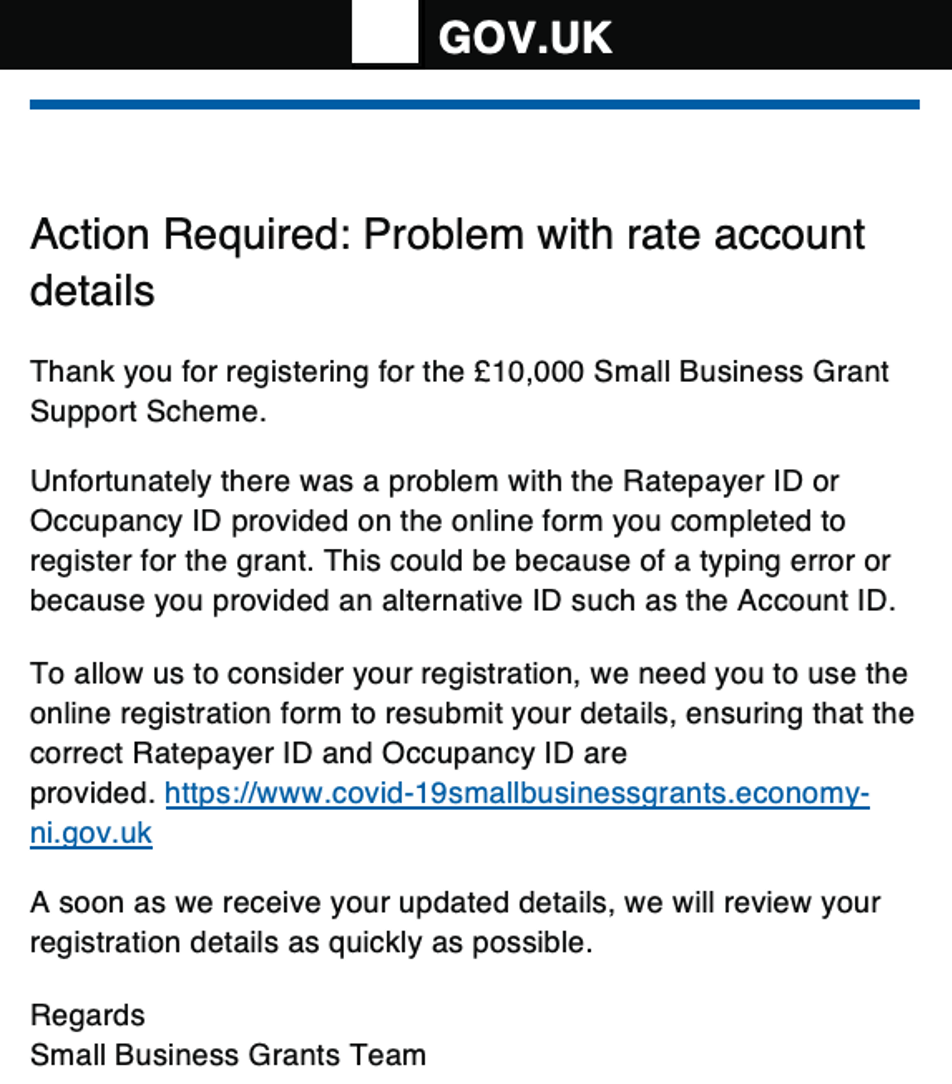
To help protect yourself from scams like these during this time, please bear in mind these important tips:
DO
✓ Always install the latest software and app updates to protect your devices from the very latest threats.
✓ Reject any offers that come out of the blue that you were not expecting.
✓ Be wary of promised returns that sound too good to be true – they most likely are.
✓ Beware of adverts on social media channels and paid for or sponsored adverts online.
✓ Factcheck claims circulating via social media by using Snopes. This is the original fact-checking website that is a very well-regarded reference for clarifying myths and rumours.
✓ If you’re making a purchase from a company or person you don’t know and trust, always carry out some research first before completing the purchase. If you decide to go ahead with a purchase, use a credit card if you have one – as most major credit card providers will insure online purchases.
✓ Always take your time to access and check everything you need and ask friends and family for advice – even if this means turning down an ‘unmissable deal’!
DO NOT
✗ Avoid opening emails from senders you don’t already know.
✗ Never click on any links or attachments in suspicious emails.
✗ Do not click on fake domains – scammers often set up website addresses that look legitimate in order to trick you.
✗ Never respond or act on an urgent tone – phishing messages like these are designed to scare you into acting quickly.
✗ Do not respond to unsolicited messages and calls that ask for your personal details, such as bank details, address, existing insurance/pensions or investment details.
If you suspect you may have been contacted in what could be a scam, you can make a complaint to the Insolvency Service or call Action Fraud on 0300 123 2040.
With Coronavirus now being a classified pandemic, we understand you may have many personal and business-related concerns.
We are ‘business as usual’ here at Omni Davis, so if you have any insurance related queries or need some advice, please contact us on 01403 785775 or send an email to info@omnidavis.co.uk. We would be more than happy to help.